Powering a Global Gathering of Leaders and Change‑Makers with Seamless Digital Experiences
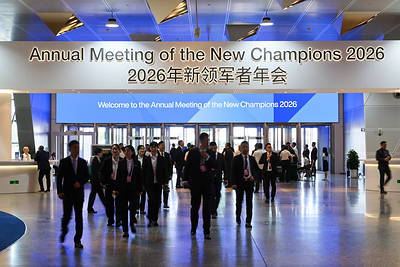
DALIAN, China, June 23, 2026 /PRNewswire/ -- Tencent Cloud, the cloud business of global technology company Tencent, today announced that it is collaborating with the World Economic Forum's Annual Meeting of the New Champions, also known as "Summer Davos." The event will bring together more than 1,700 global leaders in Dalian, China, from June 23 to 25, 2026.
Through reliable live streaming and broadcast-grade signal transmission powered by Tencent Cloud, together with the Forum's first official Weixin/WeChat Mini Program, this collaboration will enhance the connected experience for attendees in Dalian and enable audiences worldwide to follow key sessions and discussions.
Building a Secure and Scalable Digital Experience
Leveraging its global cloud infrastructure, Tencent Cloud will support Summer Davos through a suite of media and acceleration technologies designed to deliver high-quality digital experiences for participants and audiences in China.
Tencent Cloud's Cloud Streaming Services (CSS) will enable live streaming across 4 channels 53 forum sessions, providing stable, low-latency delivery of key sessions and discussions.
Behind the scenes, StreamLink will deliver secure, cross-continental transmission of four primary live feeds between the Dalian venue and the Geneva studio, helping ensure resilient global connectivity throughout the event.
To support instant replay and on-demand viewing, Tencent EdgeOne will provide content delivery acceleration and security capabilities, enabling efficient and secure content distribution to audiences at scale.
Together, these technologies power a secure and scalable digital foundation for Summer Davos, enabling seamless content delivery and audience engagement before, during, and after the event.
Enhancing Engagement through the Weixin/WeChat Ecosystem
Ahead of Summer Davos, the World Economic Forum will launch its first official Weixin/WeChat Mini Program. Powered by Tencent, it will provide participants in Dalian and audiences in China and around the world with convenient access to event information, live content and interactive services.
By bringing the event experience into China's most widely used super-app ecosystem, the Forum expands access to content and services for local audiences, helping drive deeper engagement.
Poshu Yeung, Senior Vice President of Tencent Cloud and Head of Tencent Cloud International, said, "We are honored to support the World Economic Forum's Summer Davos 2026 in Dalian. This partnership reflects Tencent Cloud's commitment to enabling global platforms with secure, scalable, and innovative digital services. By powering the event with EdgeOne and cloud streaming capabilities, we are helping to create a seamless digital environment that helps connect leaders and ideas worldwide."
About the Partnership
This collaboration marks the beginning of a broader partnership between Tencent and the World Economic Forum. Beyond supporting Summer Davos, the project establishes a foundation for long‑term strategic cooperation and future initiatives that will strengthen the Forum's activities in China.
About Tencent Cloud:
Tencent Cloud, one of the world's leading cloud companies, is committed to creating innovative solutions to resolve real-world issues and enabling digital transformation for smart industries. Through our extensive global infrastructure, Tencent Cloud provides businesses across the globe with stable and secure industry-leading cloud products and services, leveraging technological advancements such as cloud computing, Big Data analytics, AI, IoT, and network security. It is our constant mission to meet the needs of industries across the board, including the fields of gaming, media and entertainment, finance, healthcare, property, retail, travel, and transportation.
About the World Economic Forum
Founded in 1971 and headquartered in Geneva, Switzerland, the World Economic Forum is an independent international non‑profit organization serving as a global platform for public‑private cooperation. In addition to its flagship Annual Meeting in Davos, Switzerland, the Forum organizes Summer Davos in China, which highlights innovation, emerging technologies, entrepreneurship, and industry transformation in dynamic markets.
 View original content to download multimedia:https://www.prnewswire.co.uk/news-releases/world-economic-forum-and-tencent-cloud-collaborate-to-enhance-the-digital-experience-for-summer-davos-2026-in-dalian-302807280.html

Die Zahl der Demenzerkrankungen in Deutschland könnte bis 2060 deutlich ansteigen und das Versorgungssystem spürbar unter Druck setzen. Nach neuen Prognosen des Wissenschaftlichen Instituts der AOK (WIdO) dürfte die Zahl der Betroffenen bei weiter steigender Lebenserwartung von derzeit rund 1,3 Millionen auf bis zu 2,1 Millionen zunehmen. Grundlage der Berechnungen ist ein kleinräumiges Prognoseverfahren, das das Institut gemeinsam mit den Universitäten Trier, Rostock und Köln entwickelt hat.
Die Analyse reicht hinunter bis auf die Ebene von 400 Kreisen und kreisfreien Städten und macht deutliche regionale Unterschiede sichtbar. Bereits 2020 lag der Anteil der Demenzkranken zwischen 1,0 Prozent in Tübingen und 2,6 Prozent in der brandenburgischen Prignitz. Für das Jahr 2060 erwarten die Forscher eine Spanne von 1,7 Prozent Demenzkranken in München bis zu 6,2 Prozent im Landkreis Elbe-Elster in Brandenburg. Besonders betroffen sind damit vor allem ländliche Regionen im Osten, die überdurchschnittlich altern.
Parallel zur wachsenden Zahl von Demenzfällen schrumpft der Pool potenzieller Pflege- und Betreuungspersonen im Erwerbsalter. Laut Studie kamen im Jahr 2020 rechnerisch noch 38 Menschen im erwerbsfähigen Alter auf einen Demenzfall. Bis 2060 dürfte dieses Verhältnis auf 21 Erwerbspersonen pro Fall sinken. Damit würden deutlich mehr Erkrankte von einer deutlich kleineren Zahl potenziell Erwerbstätiger versorgt werden müssen – mit entsprechenden Konsequenzen für Pflegeinfrastruktur, Kommunen und Sozialversicherungen.
Die Autoren der Studie betonen zugleich, dass der prognostizierte Anstieg nicht zwangsläufig ist. Nach heutigem wissenschaftlichem Stand lassen sich Demenzrisiken durch Prävention spürbar senken. Eine konsequentere Behandlung von Bluthochdruck und Diabetes, der Verzicht auf Rauchen oder ein höheres Bildungsniveau könnten dazu beitragen, etwa die Hälfte der Neuerkrankungen zu vermeiden. In einem solchen Szenario würde sich die Zahl der Demenzfälle im Jahr 2060 nicht weiter erhöhen, sondern sich auf einem Niveau zwischen 1,3 und 1,5 Millionen stabilisieren. Die Spannbreite der Projektionen zeigt damit, wie stark der künftige Versorgungsdruck von heute eingeleiteten Präventionsstrategien abhängen dürfte.