STOCKHOLM, June 30, 2026 /PRNewswire/ -- Domsjö Fabriker is moving forward with plans to further develop its existing operations at High Coast Innovation Park in Örnsköldsvik, Sweden. The project has applied for a subsidy from Klimatklivet, Sweden's national climate investment programme, to upgrade biogas from industrial processes into liquefied biogas, LBG, which can replace fossil diesel in heavy transport. The aim is to commission the plant during Q4/2028.
The goal is to make better use of side streams and energy flows within the industrial cluster in Örnsköldsvik. Biogas from Domsjö Fabriker, and potentially other parties within the park at a later stage, will be upgraded into liquefied biogas, LBG, to be used as fuel sold on the open market.
Once the plant reaches full capacity, it is expected to be able to replace approximately 100 GWh of fossil diesel per year with 100 GWh of LBG. This corresponds to an annual reduction in greenhouse gas emissions of approximately 26,700 tonnes of carbon dioxide.
Sweden is currently highly dependent on imported fuels. Local production of liquefied biogas can contribute to increased regional self-sufficiency, stronger security of supply and better access to fossil-free fuels. This is particularly important for heavy transport, such as trucks and shipping, where the transition away from diesel is more challenging than for passenger cars.
Domsjö Fabriker is collaborating with Adven, an infrastructure partner in energy, water and side-stream valorisation, which has participated in the project's development and design phase. The ambition is to continue the partnership into the next phases.
"We are very pleased to collaborate with Domsjö Fabriker, a company with a long history that combines industrial tradition with the courage to adapt to a new era. Together, we can make use of existing industrial flows and develop circular, resource-efficient solutions that create value for both industry and Sweden as a whole," says Jonas Sjölander, Group CEO of Adven.
"This is a climate investment with a clear resilience dimension. Local production of liquefied biogas strengthens Sweden's robustness in the event of disruptions to fuel supply and helps broaden the transition to fossil-free transport, as an important complement to electrification. This is especially significant for heavy transport, where access to reliable fossil-free fuels is crucial. In the long term, liquefied biogas can also create better conditions for fossil-free vehicle fleets in essential public services, such as rescue, police and ambulance services," continues Lena Ek, Board Member at Adven and former Swedish Minister for the Environment.
For the project to be commissioned during the fourth quarter of 2028, an efficient and predictable permitting process is now required. Adven and Domsjö Fabriker intend to carry out the project, provided that the state climate investment subsidy is granted and that the necessary permits, including environmental and building permit, are obtained.
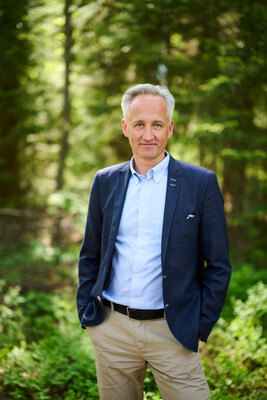
"This is an exciting project that is well aligned with the ambition to create best climate effect per krona invested. Efficient cooperation with the municipality and the county administrative board will now be crucial to keep the schedule, enabling commissioning during the fourth quarter of 2028," says Björn Vedin, CEO of Domsjö Fabriker.
For more information, please contact:
Björn Vedin, CEO of Domsjö Fabriker, bjorn.vedin@domsjo.adityabirla.com
About Domsjö Fabriker
Domsjö Fabriker is a biorefinery located in Örnsköldsvik, in Sweden's High Coast region, at the High Coast Innovation Park industrial area. The company refines renewable raw material from the forest into sustainable, bio-based products such as speciality cellulose, lignin and bioethanol. These are used in a wide range of applications, including clothing, pharmaceuticals, packaging and chemicals.
With a focus on maximising the value of every tree and replacing fossil raw materials, Domsjö Fabriker contributes to the transition towards a more sustainable society. Production is carried out with high ethics and environmental standards, including the world's first fully closed and chlorine-free bleaching plant.
Domsjö Fabriker is part of Aditya Birla Group, an expanding Indian business group with operations around the world.
Photo - https://mma.prnewswire.com/media/3002125/Domsjo_Fabriker_1.jpg
Photo - https://mma.prnewswire.com/media/3002124/Domsjo_Fabriker_2.jpg
Logo - https://mma.prnewswire.com/media/3001905/6017435/Domsjo_Fabriker_Logo.jpg

 View original content to download multimedia:https://www.prnewswire.co.uk/news-releases/the-biorefinery-domsjo-fabriker-wants-to-strengthen-swedens-supply-of-liquefied-biogas-with-adven-as-infrastructure-partner-302813676.html

Silicon Saxony schärft sein Profil als europäischer Technologiestandort – und setzt dabei zunehmend auf hochspezialisierte Anwendungen. Mit dem Zukunftscluster SEMECO (Secure Medical Microsystems and Communications) startet in Dresden die zweite Förderphase für medizinische Halbleiter, während die sächsische Halbleiter- und Softwarebranche trotz schwacher Konjunktur weiter Beschäftigung aufbaut. Branchenangaben zufolge ist die Zahl der Jobs in diesem Ökosystem binnen eines Jahres um 1.500 auf rund 82.500 zum Stichtag 30. September 2025 gestiegen, ein Plus von knapp zwei Prozent gegenüber dem Vorjahr.
SEMECO entwickelt medizinische Halbleiter als Schlüsseltechnologie für sichere, vernetzte und intelligente Medizintechnik. Für die kommenden drei Jahre erhält der Cluster im Rahmen der Clusters4Future-Initiative des Bundesministeriums für Bildung und Forschung (BMBF) bis zu 15 Millionen Euro Fördermittel. Der Freistaat Sachsen begleitet das Bündnis seit Beginn und unterstützt zusätzliche regionale Forschungs- und Entwicklungsprojekte über die EFRE-Technologieförderung 2021 bis 2027. Seine aktuellen Entwicklungen präsentiert SEMECO auf den Silicon Saxony Days, die vom 15. bis 17. Juni 2026 in Dresden stattfinden sollen.
In der zweiten Förderphase richtet SEMECO den Fokus stärker auf standardisierbare medizinische Halbleiterplattformen und deren Transfer in industrielle und klinische Anwendungen. Die spezialisierten Mikrosysteme bündeln Sensorik, Datenverarbeitung, sichere Kommunikation und KI-gestützte Funktionen, zugeschnitten auf Anforderungen der Medizintechnik. Auf Basis eines modularen Plattformansatzes entstehen kombinierbare Halbleiter-, Elektronik- und Softwarekomponenten, die sich sicher integrieren und schrittweise weiterentwickeln lassen. KI-gestützte Methoden sollen zudem Zertifizierung und Zulassung unterstützen und damit den Technologietransfer in die medizinische Praxis beschleunigen – von tragbaren Ultraschallgeräten und intelligenten Vitaldatensensoren bis zu Kommunikationsimplantaten für Menschen mit eingeschränktem Hör- und Sprachvermögen.
Parallel dazu sieht der Branchenverband Silicon Saxony den gesamten Standort vor einer neuen Wachstumsphase. Das jüngste Beschäftigungsplus verteilt sich nach Verbandsangaben nahezu gleichmäßig auf Halbleiterindustrie und Softwarebranche. Die Investitionen der vergangenen Jahre entfalteten zunehmend Wirkung, sagte Frank Schönefeld, Vorsitzender des Präsidiums von Silicon Saxony. Vor dem Hintergrund der gesamtwirtschaftlich schwachen Lage unterstreiche die Entwicklung die langfristige Attraktivität des Standorts. Entlang der gesamten Wertschöpfungskette – von großen Fabrikprojekten bis zu mittelständischen Zulieferern für Reinraum- und Fabrikinfrastruktur, Spezialgase, Chemikalienversorgung und Messtechnik – rechnet der Cluster mit zusätzlichen Impulsen durch Künstliche Intelligenz, Digitalisierung und technologische Souveränität. Die Prognose von mehr als 100.000 Beschäftigten bis zum Ende des Jahrzehnts bleibt aus Sicht des Verbands unverändert bestehen.