COLOGNE, Germany, Aug. 27, 2026 /PRNewswire/ -- Tencent Games Central Tech recently made its gamescom debut as a unified brand. Together with Motus AI, GIGA, MagicDawn, ACE, GVoice and WeTest, it presented a proprietary technology portfolio covering game content production, gameplay experiences and long-term live operations at gamescom dev and gamescom.
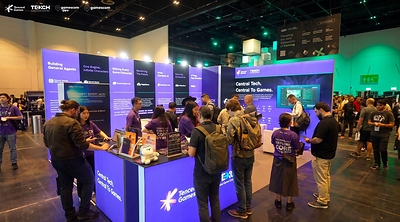
The showcase highlighted Tencent Games' continued exploration of how AI can become part of real-world development workflows and create sustained value across industrial-scale production, complex interaction and long-term operations.
This approach was also reflected in four technical sessions for game developers worldwide: "Breathing Life into Geometry 2.0: Advancing the Unified AI Pipeline for 3D Character Animation," "Building Autonomous AI Agents for FPS Battlefields," "Lighting Up Roco Kingdom: Best Practices for High-Performance Global Illumination," and "From Scripts to AI Agents: Scalable Autonomous Testing for Complex Games." Together, the sessions and on-site demonstrations showed an industry shift from evaluating individual tools to developing technologies that can integrate into workflows and become stable, reusable production capabilities.
Motus focuses on the intelligent creation of digital characters and represents this shift from isolated capabilities to an integrated production system. Powered by Tencent Games' proprietary family of generative animation foundation models, it connects the character animation pipeline through AI-native capabilities including rigging, intelligent skinning, motion generation, motion refinement and real-time character interaction. Its technologies have been deployed across multiple games.
Beyond content production, Tencent Games GIGA treats games and virtual worlds as research environments for general-purpose agents. Through general visual decision-making, language-action alignment and real-time competitive decision-making, GIGA is advancing foundation models from "understanding context" to "taking action in dynamic environments."
These intelligent characters and agents also require virtual worlds that are convincing and stable. Built on advanced rendering technologies and integrated with AI and cloud computing, MagicDawn addresses performance optimization, high-fidelity visual presentation and immersive audio. At gamescom, MagicDawn used Roco Kingdom as a case study to show how global illumination and cross-platform adaptation helped transform a classic browser game into a 64-square-kilometer, cross-platform open-world game while maintaining consistent visual quality.
As game content and interactions become more complex, long-term fairness, communication and quality assurance are equally essential. Anti-Cheat Expert (ACE) showcased mobile and PC game security capabilities covering anti-cheat protection, game and client hardening, in-game economic risk management and game threat intelligence. GVoice provides low-latency, highly reliable voice communication through AI noise reduction, a proprietary AI codec and real-time speech translation. WeTest Acorn AI Studio enables AI agents to experience games like real players and identify issues like testing specialists, supporting multiple genres and platforms.
Together, these capabilities represent Tencent Games Central Tech's technology portfolio for the full game lifecycle. Rooted in long-term development and operational experience, they are evolving from point solutions into infrastructure that can integrate with workflows, support production and enable long-term operations. Building on the same project-validated foundation, Tencent Games Central Tech is also continuing its work in emerging areas including world models and real-time interactive video, while working with developers and industry partners worldwide to explore the next generation of game experiences.
 View original content to download multimedia:https://www.prnewswire.co.uk/news-releases/tencent-games-central-tech-makes-its-gamescom-debut-accelerating-game-industry-innovation-with-full-pipeline-proprietary-ai-technologies-302861485.html

Ein nächtlicher Brand unter einer Kabelbrücke im Berliner Stadtteil Marzahn hat zentrale Leitungen des städtischen Stromnetzes beschädigt und Ermittlungen wegen Brandstiftung ausgelöst. Nach Angaben der Polizei brannten in den frühen Morgenstunden unter einer Brücke an der Boxberger Straße Altreifen und Gerümpel. Ob das Feuer gezielt gelegt wurde, ist Gegenstand laufender Ermittlungen. Einsatzkräfte der Polizei sicherten am Brandort Spuren, um Hinweise auf die Ursache und mögliche Täter zu gewinnen.
Die Feuerwehr war gegen 4.00 Uhr alarmiert worden und ging zunächst von einem kleineren Einsatz aus. Erst vor Ort zeigte sich, dass die Flammen auf unter der Brücke verlegte Stromleitungen übergegriffen hatten. Ein großflächiger Stromausfall blieb nach Angaben eines Feuerwehrsprechers zwar aus, die Leitungen wurden jedoch so stark in Mitleidenschaft gezogen, dass Teile der lokalen Versorgung umgestellt werden mussten.
Nach Angaben von Henrik Beuster, Sprecher von Stromnetz Berlin, mussten 19 gewerbliche Kunden vorübergehend vom regulären Netz getrennt werden. Seit etwa 9.00 Uhr würden sie über ein Notstromaggregat versorgt, sagte Beuster. Betroffen seien zwei 110.000-Volt-Hochspannungskabel sowie mehrere Mittelspannungsleitungen mit 10.000 Volt. Reparaturarbeiten an den beschädigten Trassen seien im Gange, konkrete Angaben zur Dauer der Instandsetzung lagen zunächst nicht vor.
Die Gewerkschaft der Polizei (GdP) hält einen bloßen Zufall für unwahrscheinlich und spricht von einem möglichen gezielten Angriff auf die Infrastruktur. Die Ermittlungen zur schweren Brandstiftung liefen zwar ergebnisoffen in alle Richtungen, betonte die GdP zugleich. In der Vergangenheit war es in Berlin wiederholt zu Angriffen auf Stromtrassen gekommen, die teils umfangreiche Stromausfälle nach sich zogen und nach damaligen Erkenntnissen linksextremistischen Tätergruppen zugerechnet wurden. Die aktuellen Ermittlungen konzentrieren sich nun darauf, ob und wie der jüngste Brand in Marzahn in ein solches Muster einzuordnen ist.