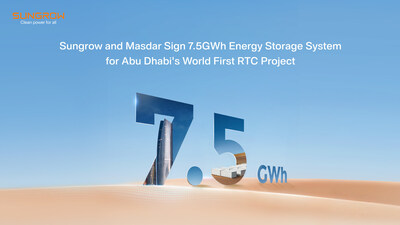
ABU DHABI, UAE, May 22, 2026 /PRNewswire/ -- Sungrow, the globally leading PV inverter and energy storage system (ESS) provider, and Masdar, a global clean energy leader, have signed an agreement for the supply of Energy Storage System and PV inverter solutions for the UAE's world-first gigascale round-the-clock renewable energy project (RTC).
Developed by Masdar and the Emirates Water and Electricity Company (EWEC), RTC combines 5.2GW of solar photovoltaic (PV) capacity with a 19GWh battery energy storage system (BESS), delivering baseload renewable energy at unprecedented scale.
Under the agreement, Sungrow will supply 7.5GWh of PowerTitan 3.0 ESS, alongside 2.6GW of PV inverter solutions, supporting the project's operational reliability and efficiency.
Designed to help meet growing demand for uninterrupted clean power, the project will support a range of applications, including energy-intensive industries, business operations, residential communities and emerging digital infrastructure.
RTC represents a major advancement in the integration of solar PV and battery storage technologies at the utility scale. Once operational in 2027, it is expected to support the delivery of reliable clean energy around the clock while enhancing grid resilience and flexibility.
24/7 Renewable Energy Delivery
RTC will deploy more than 1,000 PowerTitan 3.0 liquid-cooled ESS integrated with advanced PV inverter technologies to support continuous power delivery and enhanced grid stability.
Each system operates on an optimized cycle of 8-hour charging and 16-hour discharging to support a stable and flexible renewable energy supply. Featuring an AC block design and rack-level management, the system is designed to enhance operational safety and efficiency.
Efficiency and Performance in Challenging Conditions
The system incorporates a fully liquid-cooled Silicon Carbide Power Conversion System (SiC PCS), achieving a maximum efficiency of 99.3 percent and a system RTE of 90 percent.
Designed for operation in demanding climates, the system can operate at temperatures of up to 55°C without derating, making it well suited to the UAE environment.
RTC reimagines the potential of renewable energy by overcoming intermittency. Once operational, it will produce gigascale baseload renewable energy at a globally competitive tariff for the first time. The project is designed to be a blueprint that can be replicated around the world.
About Sungrow
Sungrow, a global leader in renewable energy technology, has pioneered sustainable power solutions for over 29 years. As of Dec 2025, Sungrow has installed over 1000 GW of power electronic converters worldwide. The company is recognized as the world's most bankable PV inverter and energy storage company (BloombergNEF). Its innovations power clean energy projects across the globe, supported by a network of 520 service outlets guaranteeing excellent customer experiences. At Sungrow, we're committed to bridging to a sustainable future through cutting-edge technology and unparalleled service. For more information, please visit: www.sungrowpower.com/en

Photo - https://mma.prnewswire.com/media/2985180/7_5_Abu_Dhabi.jpg
Logo - https://mma.prnewswire.com/media/1344575/Logo.jpg
 View original content:https://www.prnewswire.co.uk/news-releases/sungrow-and-masdar-sign-7-5gwh-energy-storage-system-for-abu-dhabis-world-first-rtc-project-302779708.html

Ein Zwischenfall mit einem Kleinflugzeug hat am Montagnachmittag den Flugbetrieb am Hamburger Flughafen vorübergehend zum Erliegen gebracht. Eine aus Cannes kommende Maschine setzte bei der Landung mit der Nase auf und wurde dabei beschädigt, wie ein Flughafensprecher mitteilte. Verletzt wurde niemand. Nach Angaben des Sprechers war das Flugzeug in Hamburg gelandet und „dabei zu Schaden gekommen“.
Dem Boulevardblatt „Bild“ zufolge verlor das Kleinflugzeug beim Aufsetzen sein Bugrad und setzte anschließend mit der Flugzeugnase auf der Piste auf. An Bord sollen zwei Personen gewesen sein. Offiziell bestätigt wurden zunächst der Schaden an der Maschine und das Ausbleiben von Verletzten. Um welche Art von Flug handelte, wurde zunächst nicht detailliert erläutert; laut „Bild“ soll es sich um eine Socata TBM-700C gehandelt haben.
Die Beschädigung der Maschine führte dazu, dass der komplette Flugbetrieb in Hamburg zeitweise gestoppt werden musste. Während der Bergung des Flugzeugs und der anschließenden Reinigung der Start- und Landebahn waren weder Starts noch Landungen möglich. „Das muss sehr gewissenhaft gereinigt werden“, sagte der Sprecher. Schon kleinste Trümmerteile könnten beim Starten und Landen gefährlich für andere Flugzeuge werden.
Die betroffene Maschine traf gegen 16 Uhr am Hamburger Flughafen ein. Spezialisten sollen nun untersuchen, wie es zu dem Vorfall kommen konnte. Der Flughafen nahm den Betrieb wieder auf, nachdem das Kleinflugzeug geborgen und die Bahn gereinigt worden war. Mit Verspätungen und Umleitungen war in der Folge zu rechnen, während sich der Verkehr schrittweise normalisierte.